
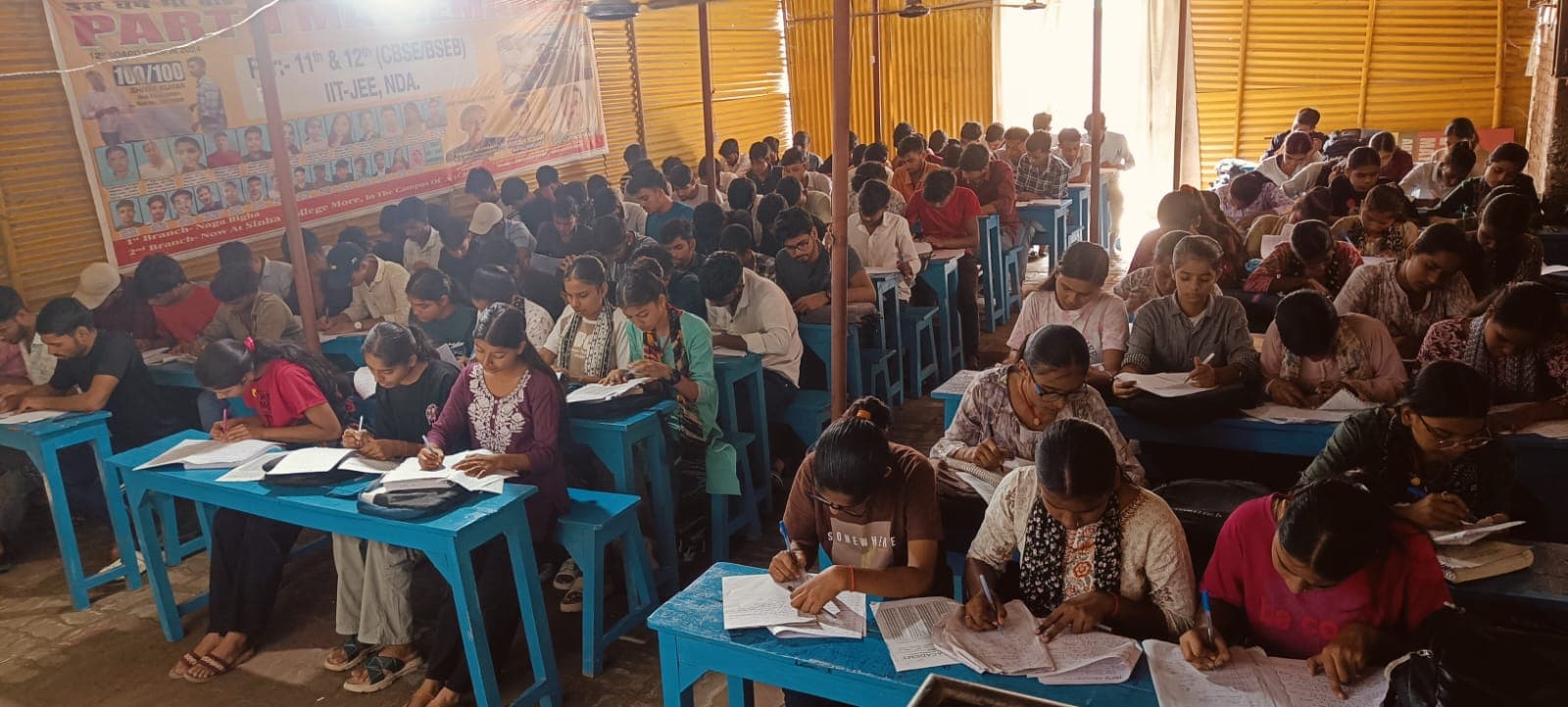
Nabinagar and Obra, home to major thermal power projects in Aurangabad district, and the nearby block of Madanpur, sit in a slightly different position than the district headquarters when it comes to coaching access. Families here are often connected to technical and engineering work through the power plants themselves, which tends to produce a strong, practical interest in JEE preparation specifically — parents who work in or around engineering fields tend to have a clear, informed sense of what an engineering career actually involves, which shapes how seriously they take early preparation.
The commute question is the first practical issue families in this belt have to solve, and it's worth addressing directly rather than glossing over. A daily commute from Nabinagar or Obra into Aurangabad town for coaching is a real time and logistics cost, one that compounds over a two-year preparation window. Before enrolling anywhere, ask specifically about batch timings and whether they've been set with commuting students in mind, or purely around the convenience of students who live within walking distance.
For families who can't manage a daily commute, boarding or hostel arrangements closer to the coaching institute are worth asking about directly, even at institutes that don't advertise them prominently. Some students from Obra and Nabinagar end up staying with relatives in Aurangabad town during the week and returning home on weekends — a workable middle path that avoids both a long daily commute and a full relocation to a distant city.
The power plant connection in Nabinagar and Obra creates a specific and useful advantage worth naming directly: many students here have grown up around functioning industrial and engineering infrastructure, which gives JEE Physics and Chemistry concepts — thermodynamics, electricity, mechanical systems — a tangible, real-world reference point that students without that exposure sometimes lack. A good mentor can use this connection deliberately, tying abstract exam concepts back to systems the student has literally grown up seeing in operation.
Madanpur, more agricultural in character than the industrial towns nearby, presents a different profile — families here are often weighing coaching costs against agricultural income cycles, which can be seasonal and variable in a way that affects when families are comfortable committing to coaching fees. Institutes willing to discuss flexible payment timing tied to harvest seasons, rather than rigid upfront annual fees, genuinely serve this population better than a one-size-fits-all payment structure.
For NEET aspirants specifically in this belt, the same core requirements apply as anywhere else in Aurangabad district — dedicated Biology faculty, weekly full-syllabus testing, individual tracking — but the practical question of how a student actually gets to class reliably twice a week for six days matters more here than in the district headquarters itself, simply because of distance. Ask any institute directly how they handle a student who occasionally can't make it in due to transport issues — is there a way to catch up on missed content, or does the student simply fall behind.
Class 9 and 10 students in Obra, Nabinagar, and Madanpur preparing for a foundation-level start to JEE or NEET preparation benefit particularly from proximity-aware scheduling, since younger students are less able to independently manage a long commute than a 17- or 18-year-old preparing for their final attempt. Weekend-concentrated foundation batches, rather than daily after-school sessions, are often a more realistic fit for younger students commuting from this belt.
Word-of-mouth carries particular weight in these smaller industrial towns, where families often know each other through the power plant workforce or through shared agricultural community ties. This is generally a positive thing for evaluating a coaching institute honestly — ask other parents in Obra, Nabinagar, or Madanpur directly about their child's actual experience, batch size, and whether the institute followed through on what was promised at enrollment, rather than relying solely on an institute's own marketing.
Extracurricular scheduling around plant shift patterns is worth mentioning for families where a parent works rotating shifts at the Nabinagar or Obra power plants — a household where a parent's own work schedule is irregular often benefits from a student's coaching timing being predictable and fixed, since it's one of the few parts of a demanding week that can be planned around reliably rather than shifting unpredictably.
Transportation reliability during monsoon months deserves a specific mention for this belt, since flooding or road conditions between these towns and Aurangabad town can occasionally disrupt regular commuting in a way that's less common for students already based in the district headquarters. A student's preparation shouldn't be derailed by a few unavoidable missed weeks; ask how an institute handles catch-up sessions or recorded content for exactly this scenario before it happens.
Group enrollment from the same village or plant colony is common in this belt, and it's worth using deliberately rather than treating each family's enrollment as a separate transaction. Several students commuting together from Obra or Nabinagar can share transport costs, study together outside class hours, and provide each other the kind of peer accountability that's harder to build for a single isolated commuter. Institutes that actively encourage this, rather than treating students purely as individual enrollments, tend to serve this belt better.
Language mix in the classroom is worth noting for this belt specifically, since Nabinagar and Obra's industrial workforce draws families from outside Bihar as well, creating a more linguistically mixed student population than some purely local towns. A batch that can comfortably explain concepts in Hindi, English, and with reference points both students and non-local families understand tends to serve this particular mix of families better than an institute built around a single regional assumption, and it's worth asking directly how a prospective institute handles a classroom where not every student shares the same first language.
If your family is in Obra, Nabinagar, or Madanpur and evaluating JEE or NEET coaching options, we'd encourage a direct conversation about batch timing, transport realities, and catch-up policies before enrolling — these practical logistics matter as much as teaching quality for students commuting from this part of Aurangabad district.