
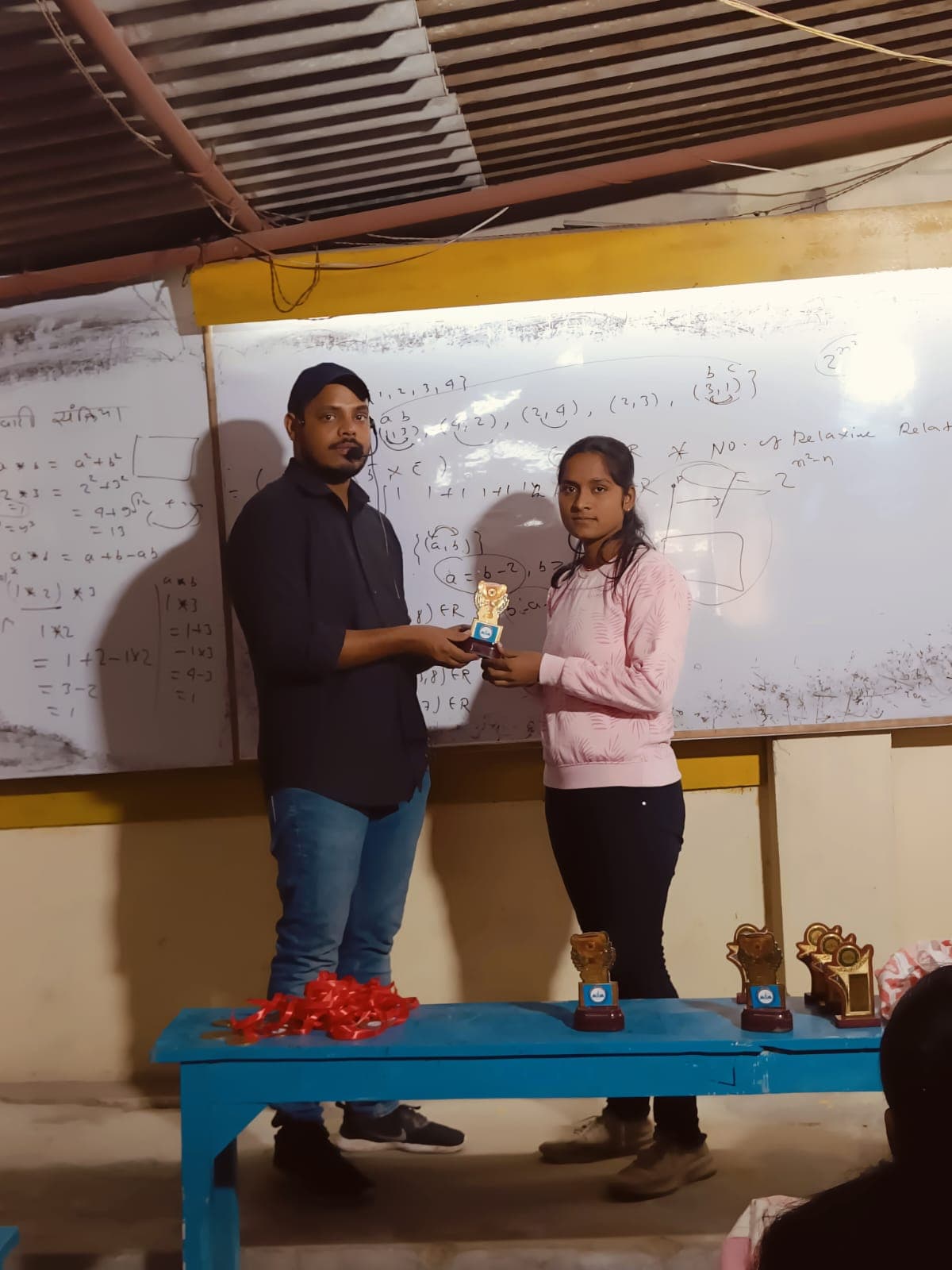
For many families in Aurangabad district, a conversation about NEET or JEE preparation for a daughter eventually runs into a concern that families raising sons less often voice as directly: is it safe to send her away from home, to an unfamiliar city, to live in a hostel among strangers, for two years during exactly the age when parental oversight matters most. This is not an unreasonable concern, and it deserves a direct, honest answer rather than being brushed aside as old-fashioned thinking.
The data on NEET, specifically, is worth stating plainly because it changes how this decision should be framed: nationally, more girls than boys have qualified NEET in recent years, and medicine remains one of the fields where women are exceptionally well represented at the student level, even in smaller towns and rural districts. The concern families raise is almost never about a daughter's capability — it's specifically about the safety and appropriateness of the environment she'd be preparing in, which is a separate and entirely legitimate question.
This is precisely where local coaching in Aurangabad district offers something that relocating to Patna or Kota structurally cannot: a daughter can pursue serious, rigorous NEET or JEE preparation while continuing to live at home, under family supervision, in a familiar community, without any compromise on the quality or seriousness of her academic preparation. The choice families are often implicitly presented with — safety versus serious preparation — is a false choice once a genuinely rigorous local option exists.
For families who are still weighing an eventual move to a bigger city, or whose daughter's preparation needs eventually exceed what's available locally, it's worth asking any institute directly and specifically about safety infrastructure: is there safe, monitored transport for students commuting from surrounding villages, are batch timings scheduled to avoid students traveling alone after dark, and does the institute have a female staff member available for concerns a daughter might not feel comfortable raising with a male mentor.
Classroom composition and culture matter here in a way that's easy to overlook when evaluating coaching purely on academic merit. A batch environment where girls feel genuinely comfortable asking questions, competing academically, and receiving direct, honest feedback — the same way boys in the same batch do — produces meaningfully better outcomes than one where girls, even unintentionally, receive softer expectations or less rigorous engagement from faculty.
We've found that many families in Aurangabad district, once they see a genuinely rigorous local option firsthand — a daughter sitting the same weekly full-syllabus tests as every other student, held to the same standard, tracked with the same individual attention — reconsider an assumption they'd been carrying by default: that serious preparation necessarily requires relocating away from home. It doesn't, and for many families it shouldn't have to.
Financial considerations intersect with this conversation more than families always acknowledge directly. Relocating a daughter to Kota or Patna involves the same hostel, mess, and travel costs any student faces, and for some families, an unspoken calculation happens where a son's relocation feels like an easier expense to justify than a daughter's — not out of any explicit unfairness, but simply because the safety-cost tradeoff for a daughter feels heavier. A strong local option removes that tradeoff from the equation entirely.
For younger sisters and daughters watching how a family handles an older sibling's education decisions, this matters beyond the immediate preparation years. A family that finds a way to give a daughter serious, rigorous, well-supported preparation without treating her safety as a reason to lower academic expectations sets a visible example that shapes how the whole household thinks about what's possible for the next daughter, too.
Role models matter in this conversation more than families always realize. A daughter in Aurangabad district who sees an older girl from her own town or a neighboring village succeed in NEET or JEE through a local coaching path — rather than only hearing about success stories from students who relocated to distant cities — internalizes a version of the path to medicine or engineering that feels genuinely achievable from where she already is, rather than one that seems to require leaving home first.
It's also worth naming directly that safety concerns, when real, shouldn't be resolved by simply lowering academic ambitions for a daughter as a workaround. The right response to a legitimate safety concern is finding a genuinely rigorous, safe option — not quietly steering a capable daughter toward a less demanding path, or a less competitive exam, because the more direct route feels logistically harder to make safe. A serious local option removes the need for that quiet compromise entirely.
None of this is to suggest safety concerns about relocation are irrational or should simply be dismissed — they're grounded in real considerations that deserve to be taken seriously, not argued away. The point is that families in Aurangabad district increasingly don't have to choose between addressing those concerns and giving a daughter access to genuinely serious, competitive-level NEET or JEE preparation, because that level of preparation is now available locally.
Extended family opinion often plays an outsized role in these decisions in Aurangabad district, sometimes more than the immediate parents' own judgment. A grandparent or relative's blanket objection to a daughter attending coaching in mixed batches, or commuting independently, can carry real weight in a household's final decision even when the parents themselves are supportive. Institutes that offer a genuine, low-pressure opportunity for extended family to visit and observe a class firsthand often do more to address these concerns than any conversation alone could, since seeing a disciplined, respectful classroom environment directly tends to be more persuasive than any reassurance offered secondhand.
If your family in Aurangabad district is weighing NEET or JEE preparation options for a daughter, we'd encourage a direct visit to see an actual class in session and to ask specifically about the questions raised here — safety, classroom culture, and whether she'll be held to the same rigorous standard as every other student in the batch.